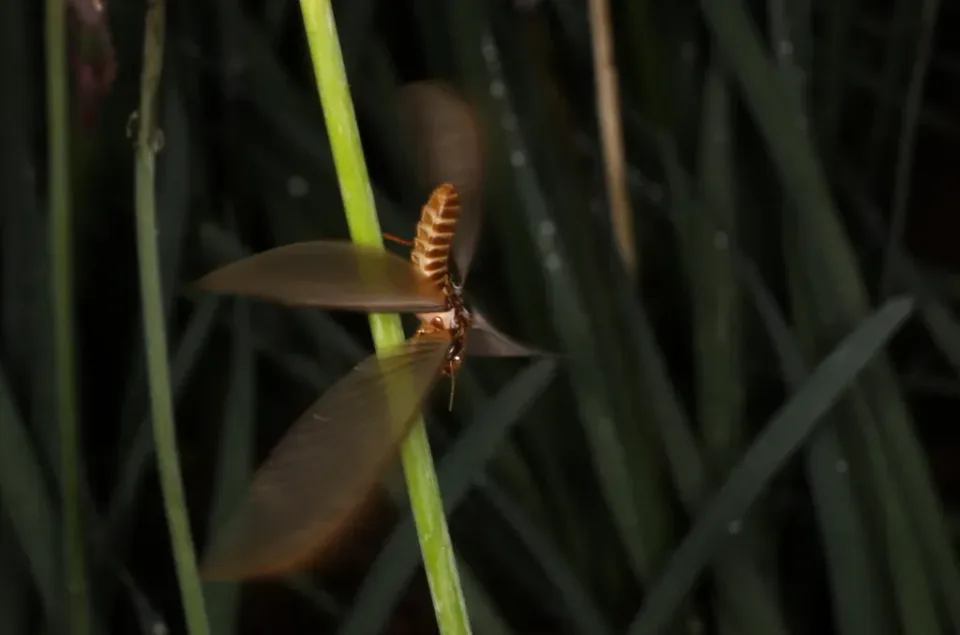
Are Discarded Wings a Sign of Termite Swarmers?
Finding wings beside a windowsill after a swarm can mean termites or flying ants; compare the insects and their wings before deciding what to do. Termite swarmers shed their wings after finding a place to start a colony, so save a sample or take a clear close-up photo. In Ohio, warmer weather can also bring more visible ant, wasp, and cockroach activity, which makes identification not a quick spray the useful first step.
-
Wing shape: Termite wings are similar in length; flying ants have larger front wings than rear wings.
-
Body shape: Look for a broad waist on a termite or a pinched waist on an ant.
-
Antennae: Termite antennae appear straight; ant antennae bend at an angle.
-
Where you found them: Keep the location and date with your sample for a clearer inspection.
At Carillon Historical Park, visitors can see how Ohio homes and buildings have changed; at home, check window trim and nearby wood rather than assuming a few wings settle the question. Early freezes can shift pests into wall voids, so a winter discovery still deserves attention.
Are the Wings Equal in Length?
Discarded wings beside a sill are a clue, but their proportions can help separate termite swarmers from flying ants. Termite swarmers have four wings that are close to equal in length; flying ants have a noticeably longer front pair and shorter hind wings.
Use a flashlight and compare several wings on a plain surface. Don’t rely on color alone.
Dust, lighting, and age can change how a wing looks, and a crushed insect can hide the body features that would make identification easier.
Ohio’s humid continental climate means outdoor conditions shift across the year, so a cluster spotted after a warm spell should be recorded with its date and location. Our crew checks nearby window frames, door trim, and other accessible wood instead of treating the wings as proof by themselves. For another sign to compare, read our guide to termite mud tubes on an Ohio foundation.
Does the Insect Have a Pinched Waist?
A narrow, pinched waist points toward a flying ant; a termite’s body has a thicker, straighter outline between its sections. Ants also have elbowed antennae, while termite antennae are more nearly straight.
These differences are easiest to see on a clear, intact specimen. If possible, place one insect beside a ruler or coin for scale in a photo, but don’t handle a live swarm with bare hands.
A photo can help, but it is not a full inspection. Buildings near the Ohio River Scenic Byway include varied settings and exposures; wherever you live, note whether the insects came from outside or appeared indoors.
The John A. Roebling Suspension Bridge spans the Ohio River, a reminder that homes across the state sit in different environments; the landmark doesn’t identify a pest, but a nearby river setting can make careful checks around the foundation and wood worthwhile.
When Should You Call About Wings Indoors?
Call for an inspection when swarmers or shed wings appear inside, return in multiple rooms, or sit near damaged or persistently damp wood. A few wings at an exterior door after insects gathered outdoors may have a different explanation, but their location still matters. Don’t seal an opening or apply household pesticide before you know what entered; either step can obscure where activity began.
Lake-effect snow affects northeastern Ohio, and winter conditions can make exterior checks difficult. That is no reason to dismiss indoor evidence: photograph the wings, keep a sample in a closed container, and arrange access to the affected area.
In Canton, the Pro Football Hall of Fame is a familiar landmark, but local homes still need an inspection based on their own construction and observed signs. We document what we find and explain the next step plainly.
Should You Inspect or Treat the Area Yourself?
For an isolated cluster that appears to have come from outdoors, you can collect a sample, vacuum loose wings, and watch the spot for renewed activity. Do not assume vacuuming resolves a colony.
If swarmers emerged indoors, or you find mud tubes, damaged wood, or repeated activity, stop at observation and request a professional inspection. Treatment choice depends on what the inspection finds, not simply on the presence of wings.
The Cincinnati Zoo and Botanical Garden draws visitors to the region, but a home’s pest evidence is specific to that property. We inspect accessible areas, identify the insect where possible, and explain whether further evaluation is warranted before recommending treatment. For a related concern about soft or hollow-sounding trim, see our article on repairing soft wood near a doorframe.
Which Termite Inspection Option Fits the Evidence?
When wings raise concern, the right next step depends on whether activity is localized, connected to soil, or not confirmed; an inspection helps distinguish those situations before treatment.
| Option | Best for | Key detail |
|---|---|---|
| Liquid soil termiticide treatment | Confirmed subterranean termite activity near soil | Creates treated soil zones; trench dimensions follow the product label. |
| Termite baiting system | Ongoing colony monitoring and control | Station dimensions vary by manufacturer, and stations require monitoring. |
| Localized termite treatment | Confirmed activity concentrated in a limited area | Spot treatment addresses a specific location rather than a whole foundation. |
| Post-construction termite treatment | Existing homes with confirmed termite risk | Treatment area may be measured in linear feet; access affects the work. |
Autumn cooling can push stink bugs indoors, but wings near an entry still need identification rather than a guess. Near Findlay Market, busy storefronts and homes can have different access needs; our inspection accounts for the actual structure.
German Village’s historic homes may also require careful attention to existing materials. Heavy thunderstorms can drive rodents indoors, a separate issue that should not be confused with termite evidence.
How to Prepare for a Wing Inspection
A useful inspection starts with preserving evidence and making the affected area reachable. Tell us where and when the wings appeared, then arrange access to the nearby window, basement, or crawlspace if needed.
-
Save a sample: Place several wings or an intact insect in a small, closed container; label where you found it.
-
Take a photo: Photograph the cluster and nearby trim before cleaning, with a coin or ruler for scale.
-
Clear access: Move belongings away from the window, foundation edge, or basement area you want checked.
-
Mention site features: Point out wells, drainage features, and any crawlspace or basement access limitations.
-
Keep the record: Note the date and room, and retain inspection or treatment records for later reference.
The Lake Erie shoreline includes homes with different exposure and weather conditions, so describe the property rather than assuming one approach fits all. If you live near Cedar Point or visit Cleveland Metroparks, those landmarks can help orient a local service request, but the inspection focuses on your home’s evidence.
Ready to Get Help Identifying Shed Wings?
Similar-length wings and a broad waist point toward termites; a pinched waist and uneven wing pairs point toward flying ants. Save a sample, photograph where it appeared, and note whether the insects emerged indoors. Act on repeated indoor activity or signs of damaged wood rather than spraying an unidentified swarm.
Ohio’s four distinct seasons bring cold winters and warm summers, so an inspection should account for what you see now as well as where activity may have started. Windstorms can damage siding and expose entry gaps, making it sensible to include nearby exterior openings in the check.
For a careful assessment, contact Ohio Pest Pros and ask about a Termite Inspection. We’ll explain the findings and recommend a practical next step.